
cassava cultivation like any other crop in farming or agriculture involves some steps during its cultivation period . Cultural Practices in cassava propagation. cassava farming involves pre-planting operations, planting operations and post planting operation. the choice of stem for planting , spacing, weeding with crude or simple farm tools or with the use herbicides.
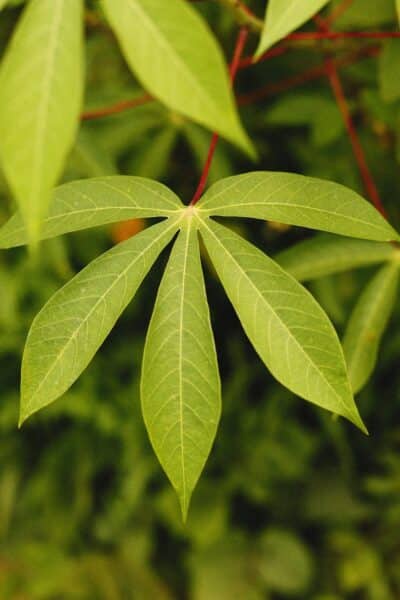
below are some of the cultural practices in cassava farming
Weeding: This is done regularly
Fertilizer Application methods: Apply 250kg/ha of NPK. Fertilizer four to six weeks after planting.
Maturity Period of cassava
This occurs between 8 – 15months depending on varieties/ in some cases, depending on the soil type , an over matured cassava up like 15 months will begin to rot in the ground.
Intercropping Systems
Cassava is commonly intercropped with other staples like maize, yams, plantains if planting is to be intercropped with cassava is not advisable from my experience , then make sure the plantain trees are all matured before introducing cassava into the farm , or legumes during the early months of growth. This maximizes land use efficiency and provides additional food security while the cassava establishes.
Maintenance and Weeding Practices
Weeding is crucial in the first 3-4 months, typically done 2-3 times during this period. After this, the cassava canopy suppresses weeds naturally. Minimal fertilization is usually needed, though phosphorus application can improve root development in very poor soils. in recent years the use of herbicides life quick action are used even in local communities . some people still use non-selective total herbicides even at the early stages
Maintenance cultural practices in cassava farming Practices
Weeding is crucial in the first 3-4 months, typically done 2-3 times during this period. After this, the cassava canopy suppresses weeds naturally. Minimal fertilization is usually needed, though phosphorus application can improve root development in very poor soils.
Harvesting cultural practices of cassava
locally it is dug or uprooted using hands to pull it out from the soil. after which the tubers are gathered and carried home for peeling. grinding is done using cassava grinding machine , bagged using sacks then the use of mechanical machine to press out the water until it is totally dried for filtering and eventually fried using cassava frying oven.
Use cutlass to remove some soil and pull the stem gently so that the tubers are pulled along or, use cassava puller. Cassava can be harvested 8-18 months after planting, depending on variety and intended use. Roots can remain in the ground as a “living storage” system until needed, though this increases pest risk.
Processing of cassava cultural practices
Cassava is processed into garri, foofoo, flour or livestock feed.
Storage: Cassava is stored in processed form in sack as garri or foofoo.
Pest and Disease Management
Common issues include cassava mosaic virus, cassava bacterial blight, and pests like mealybugs and green mites. Management involves using clean planting material, crop rotation, and resistant varieties.
Timing and Seasonality
Planting usually occurs at the beginning of the rainy season when soil moisture is adequate for establishment. In tropical regions, this can be year-round, while in areas with distinct wet/dry seasons, timing is more critical.
there’s also dry season planting. this type usually grow with the help of dews. cassava is a very durable crop with can produce even under minimal rainfall per year.
148. NEWCASTLE DISEASE
149. BACTERIA DISEASES
150. ANTHRAX
151. BRUCELLOSIS
152. TUBERCULOSIS
153. FUNGAL DISEASES
PROTOZOAN DISEASES
155. TRYPONOSOMIASIS
159. TAPE WORM
160. ROUND WORM OF PIGS
161. LIVER FLUKE
162. ECTO PARASITES
163. TICK
check out these recent posts
Originally posted 2022-02-02 12:51:26.