
What is Tapeworm and tapeworm infection? how to treat tapeworm infection. This is a long segmented flatworm which looks like the tape of the tailor. The parasite mainly affects pigs and cattle.
A tapeworm is a type of parasitic flatworm that belongs to the class Cestoda. These worms are characterized by their long, flat bodies, which are segmented into multiple sections.
Tapeworms can vary in size, ranging from a few millimetres to several meters in length, depending on the species.
Tapeworms have a complex life cycle that typically involves two hosts. The adult tapeworm resides in the intestines of a definitive host, which is usually a vertebrate animal such as a human, dog, or cat.
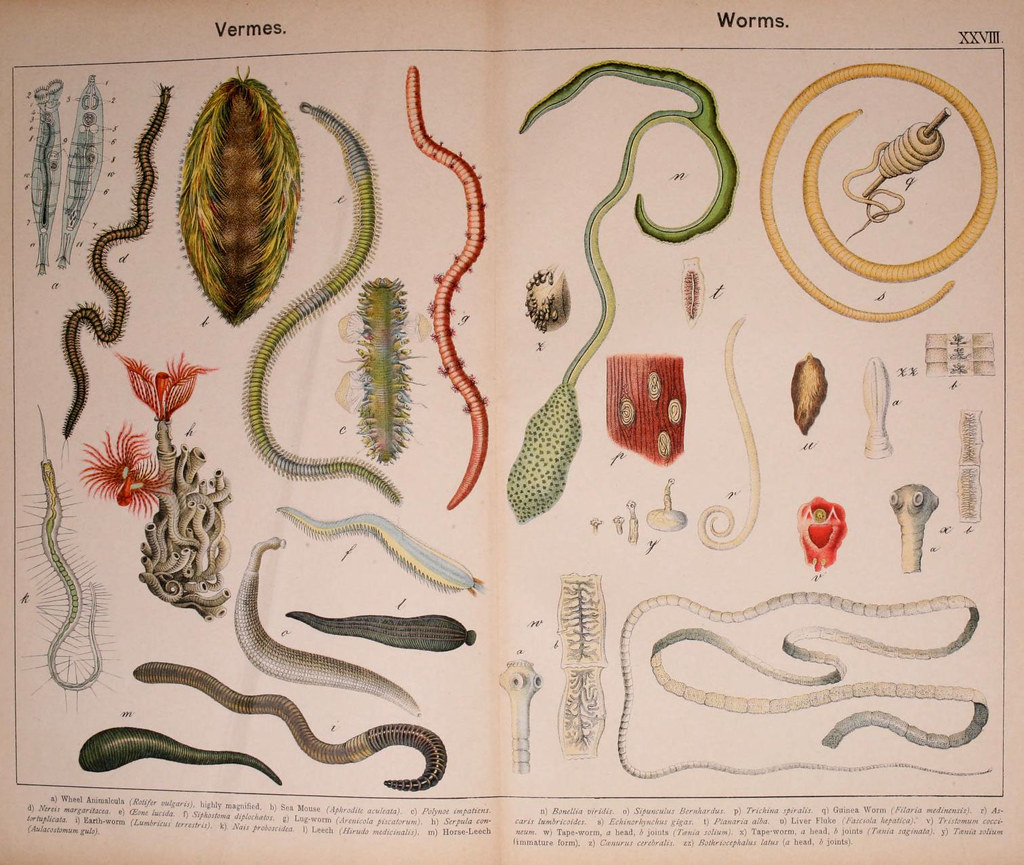
The tapeworm absorbs nutrients directly from the host’s digestive system, often causing malnutrition and other health issues in the infected host.
The life cycle of a tapeworm usually begins with eggs being passed in the faeces of the definitive host. These eggs are then ingested by an intermediate host, such as a pig or cow, through contaminated food or water.
Inside the intermediate host, the tapeworm larvae develop and form cysts in various tissues, such as the muscles or liver.
How does tapeworm infection work
The tapeworm possesses hooks and suckers in the scolex and these help to attach the parasite to its host while the suckers assist in feeding. FEEDS
In animals, the presence of tapeworm in tissues or organs could cause some physiological disorders, such as
anaemia, abdominal pains, weakness and loss of weight.
how to control tapeworm infections
The parasite can be controlled by:
(i) maintaining good hygienic conditions
(ii) use of drugs (iii) proper cooking of meat before eating by man which serves as primary host. In a General sense, methods of controlling animal diseases Diseases can be:
(i) Prevention, and
(ii) Control.
(a) Prevention:
This involves the following practices:
(i) Good sanitation/hygiene
(b) Good feeding .
(c) Vaccination
(d) Quarantine
e) Breeding
(f) Separation
(g) Rotational grazing.
(h) Control: This involves;
(i) Treatments
The use of drugs which may be in the form of powder, liquid or solids, given in water, feeds or as injections.
(ii) Destruction of diseased animals.
They are either burnt or buried.
don\’t forget to use the comment box and leave a message or suggestion and we will get back to you within seconds.
You can read some of most interesting topics below
- shares
- Mosquito bites and effect
- Ectoparasites
- How to identify Ectoparasites
- types of endoparasites and effect
Originally posted 2025-02-11 17:15:01.