
Explore the structure, function, and importance of the apical meristem in plant growth, development, and differentiation. Learn how apical meristems control primary growth and produce plant tissues.
Table of Contents
Introduction to Apical Meristem
Definition of Apical Meristem
Location of Apical Meristem in Plants
Types of Apical Meristems
Structure of the Apical Meristem
Apical Meristem in Root and Shoot
Cell Characteristics of Apical Meristem
Functions of Apical Meristem
Role in Primary Growth
Histological Zonation of Apical Meristem
Theories Explaining Apical Meristem Organization
Apical Meristem and Differentiation
Apical Dominance
Environmental and Hormonal Control
Comparison Between Apical, Intercalary, and Lateral Meristems
Importance in Tissue Culture and Biotechnology
Apical Meristem in Monocots and Dicots
Developmental Genetics of Apical Meristem
Summary of Key Points
Frequently Asked Questions (FAQ)
Introduction to Apical Meristem
Plants exhibit a unique form of growth called indeterminate growth, meaning they can grow continuously throughout their lives. This ability arises from regions of actively dividing cells known as meristems. Among these, the apical meristem is one of the most vital, responsible for primary growth, which increases the length of plant organs like shoots and roots.
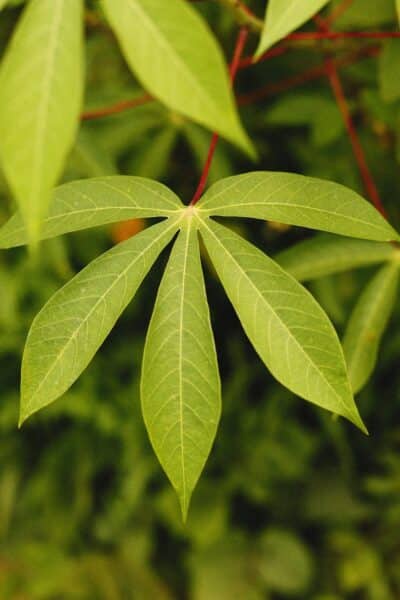
Unlike animals, plants retain meristematic tissue even in mature stages, allowing them to keep forming new leaves, branches, flowers, and roots. The apical meristem lies at the tips of roots and shoots, ensuring that plants can elongate and adapt to environmental conditions.
Definition of Apical Meristem
The apical meristem is a cluster of undifferentiated, rapidly dividing cells found at the tips (apices) of shoots and roots. These cells retain the capacity to divide indefinitely and give rise to specialized tissues through differentiation.
In simple terms, the apical meristem is the growth region that produces primary tissues — the fundamental building blocks of new plant organs. It is the engine of vertical growth in all higher plants.
Location of Apical Meristem in Plants
The apical meristem occurs in two major regions:
- Shoot Apical Meristem (SAM): Located at the tip of the stem or branches, producing leaves, flowers, and new shoots.
- Root Apical Meristem (RAM): Found at the tip of the root, generating new root cells and enabling penetration into the soil.
These two meristems are protected by specialized structures:
- The root cap shields the RAM as it pushes through soil.
- The young leaf primordia protect the SAM at the shoot tip.
Types of Apical Meristems
Apical meristems can be categorized into several types based on their function and location:
a. Shoot Apical Meristem (SAM)
This meristem gives rise to stems, leaves, and reproductive structures. It contains zones for leaf initiation and stem elongation.
b. Root Apical Meristem (RAM)
This region generates root tissues like the cortex, endodermis, and root cap. It maintains continuous downward growth.
c. Floral Apical Meristem
When the SAM transitions from vegetative to reproductive phase, it forms flowers or inflorescences. This transition is influenced by environmental cues and plant hormones.
Structure of the Apical Meristem
The apical meristem is composed of small, undifferentiated, thin-walled cells with dense cytoplasm and prominent nuclei. These cells lack vacuoles, which is a hallmark of meristematic activity.
Structurally, the apical meristem can be divided into two main zones:
a. Tunica-Corpus Organization
This is most evident in the shoot apical meristem:
- Tunica: The outermost layer(s) of cells that divide anticlinally (perpendicular to the surface), contributing to surface growth.
- Corpus: The inner mass of cells that divide in various planes, responsible for adding bulk to the plant body.
b. Histological Zones
Histologists divide the SAM into:
- Central Zone: Contains slowly dividing cells that act as a reserve.
- Peripheral Zone: Actively dividing cells forming leaves and stems.
- Rib Zone: Produces internal stem tissues.
Apical Meristem in Root and Shoot
Shoot Apical Meristem (SAM)
- Found in the growing tip of shoots and young branches.
- Produces the epidermis, cortex, and vascular bundles.
- Responsible for forming leaf primordia, which later develop into mature leaves.
Root Apical Meristem (RAM)
- Located just behind the root cap.
- Divided into zones: division, elongation, and maturation.
- Generates all tissues of the root through orderly cell divisions.
Both meristems maintain a delicate balance between cell division and differentiation, ensuring continuous growth without exhausting their stem cell pool.
Cell Characteristics of Apical Meristem
Cells in the apical meristem share unique traits:
- High nuclear-to-cytoplasmic ratio
- Thin cellulose walls
- Absence of vacuoles
- Small intercellular spaces
- Prominent nucleoli
- Active metabolic rate
- read more on cell organelle here
These characteristics make them capable of rapid mitotic divisions necessary for growth and regeneration.
Functions of Apical Meristem
The apical meristem performs several critical functions:
- Primary Growth: Extends plant length by adding new cells at the tips.
- Formation of Primary Tissues: Produces protoderm, procambium, and ground meristem, which form epidermis, vascular tissues, and cortex respectively.
- Organ Initiation: Initiates leaves, branches, and flowers.
- Repair and Regeneration: Restores damaged tissues in young growing regions.
- Maintenance of Stem Cell Population: Through self-renewal mechanisms.
Role in Primary Growth
Primary growth refers to the elongation of the plant’s axis — both roots and shoots — enabling the plant to access new resources such as light and water.
The apical meristem drives this process by:
- Constantly dividing cells at the tip.
- Differentiating into primary tissues.
- Allowing elongation through the zone of elongation in roots.
This growth is especially active in herbaceous plants, though even woody plants show apical growth before secondary thickening begins.
Histological Zonation of Apical Meristem
The apical meristem exhibits distinct histological zones depending on cell activity:
- Central Zone (CZ): Slowly dividing stem cells.
- Peripheral Zone (PZ): Rapidly dividing cells forming organs.
- Rib or Pith Zone (RZ): Contributes to the formation of internal tissues of the stem.
This zonation ensures an organized development of tissues and maintenance of growth equilibrium.
Theories Explaining Apical Meristem Organization
Botanists have proposed several models to explain the organization and function of apical meristem:
a. Apical Cell Theory
Common in lower plants (ferns, mosses). Growth originates from a single apical cell that divides to form new tissues.
b. Histogen Theory (Hanstein, 1868)
The apical meristem has three histogenic layers:
- Dermatogen: Produces epidermis.
- Periblem: Forms cortex.
- Plerome: Gives rise to vascular tissues.
c. Tunica-Corpus Theory (Schmidt, 1924)
Distinguishes between the outer tunica and inner corpus, based on division orientation.
d. Cytohistological Zonation Theory
Recognizes regions of differing cell activity within the meristem.
Apical Meristem and Differentiation
As apical meristematic cells divide, they enter a pathway of differentiation:
- Protoderm → forms the epidermis.
- Procambium → forms xylem and phloem.
- Ground Meristem → forms pith and cortex.
Differentiation transforms undifferentiated meristematic cells into specialized structures performing distinct functions.
Apical Dominance
Apical dominance is the phenomenon where the main shoot apex suppresses the growth of lateral buds. This ensures vertical growth and a streamlined plant structure.
The hormone auxin, produced by the apical meristem, is primarily responsible for maintaining this dominance. When the apical meristem is removed (as in pruning), lateral buds begin to grow, leading to bushier plants.
Environmental and Hormonal Control
The activity of apical meristems is regulated by:
- Plant Hormones: Auxins, cytokinins, gibberellins, and abscisic acid influence division and elongation.
- Environmental Factors: Light, temperature, gravity, and nutrients affect meristematic activity.
- Genetic Regulation: Genes like WUSCHEL and CLAVATA control stem cell maintenance and differentiation.
Comparison Between Apical, Intercalary, and Lateral Meristems
| Feature | Apical Meristem | Intercalary Meristem | Lateral Meristem |
|---|---|---|---|
| Location | Tips of roots and shoots | Base of nodes or leaves | Sides of stems and roots |
| Function | Primary growth | Regeneration and elongation | Secondary growth |
| Example | Shoot apex, root tip | Grasses, bamboo | Cambium, cork cambium |
Importance in Tissue Culture and Biotechnology
The apical meristem plays a vital role in plant tissue culture because:
- It is virus-free, making it ideal for cloning healthy plants.
- Used in micropropagation and meristem culture techniques.
- Helps in producing genetically uniform plants and conserving endangered species.
Apical Meristem in Monocots and Dicots
Monocots:
- SAM produces leaves in spiral or alternate patterns.
- Intercalary meristems contribute to fast elongation (e.g., grasses).
Dicots:
- SAM shows distinct tunica-corpus organization.
- Growth is slower but more controlled; apical dominance is pronounced.
Developmental Genetics of Apical Meristem
Molecular genetics has revealed several genes controlling meristem activity:
- WUSCHEL (WUS): Maintains stem cell identity.
- CLAVATA (CLV): Regulates cell proliferation.
- KNOTTED1 (KN1): Controls leaf and shoot formation.
Mutations in these genes can lead to abnormal plant growth, such as fasciation or loss of meristematic activity.
Summary of Key Points
- The apical meristem is responsible for primary growth.
- Found at shoot and root tips.
- Cells are undifferentiated and actively dividing.
- Controlled by hormones and genetic mechanisms.
- Plays a crucial role in tissue culture and regeneration.
Frequently Asked Questions (FAQ)
What is the main function of the apical meristem?
The main function is to promote primary growth, increasing the plant’s length by generating new cells at the shoot and root tips.
Where is the apical meristem located?
It is found at the apex of shoots and roots, protected by young leaves or root caps.
What are the types of apical meristem?
The three main types are shoot apical meristem (SAM), root apical meristem (RAM), and floral meristem.
How does apical meristem differ from lateral meristem?
Apical meristem causes length growth, while lateral meristem causes thickness growth.
What is apical dominance?
Apical dominance is when the main shoot inhibits the growth of side buds, ensuring vertical growth.
What cells are found in apical meristem?
Small, undifferentiated, meristematic cells with thin walls, dense cytoplasm, and active nuclei.
What are the zones of the apical meristem?
Central zone, peripheral zone, and rib zone — each responsible for specific developmental roles.
What are tunica and corpus?
The tunica forms the outer layer of cells that divide anticlinally, while the corpus forms inner tissues dividing in multiple planes.
What tissues develop from apical meristem?
It produces protoderm, procambium, and ground meristem, which differentiate into epidermis, vascular tissues, and cortex.
How does apical meristem help in tissue culture?
Because it’s virus-free, it’s ideal for micropropagation and developing disease-free plantlets.
What is the difference between SAM and RAM?
SAM governs aerial growth and leaf formation; RAM controls subterranean growth and root formation.
What triggers apical meristem activity?
Growth hormones like auxins and gibberellins, along with environmental factors such as light and temperature.
What is primary growth?
The increase in plant length due to apical meristem activity.
How do genes regulate apical meristem?
Genes like WUSCHEL and CLAVATA regulate stem cell maintenance and differentiation.
Is apical meristem permanent?
No, while it’s continuous in growth, the cells themselves eventually differentiate into permanent tissues.
What happens if the apical meristem is removed?
Lateral buds start to grow, leading to a bushy appearance — used in pruning practices.
How does the root cap protect the apical meristem?
The root cap covers the RAM, protecting it from abrasion and mechanical injury as it grows through soil.
What are meristematic cells?
They are undifferentiated plant cells capable of division, found in apical, intercalary, and lateral meristems.
What is the significance of apical meristem in agriculture?
It helps in plant propagation, genetic improvement, and yield optimization.
Why is the apical meristem essential for life of plants?
Because it is the origin point for all new tissues, enabling growth, repair, and regeneration.