
Plantain Cultivation: Types, Cultural Practices, Diseases, Storage, Fertilizer Application, and Uses
Plantain (Musa paradisiaca) is a vital staple crop in many tropical regions, especially in Africa, where it plays a major role in food security and income generation. This guide covers everything you need to know about plantain cultivation, from types to uses.
Types of Plantain in plantain cultivation
There are several plantain types grown for different culinary and commercial purposes:
- French Plantain
Most commonly grown
Produces medium to large bunches
- Horn Plantain
Known for its large size and longer fingers
Highly preferred for roasting and frying
- False Horn Plantain
Shorter and stouter
Early maturing but less productive than French types
- Dwarf Plantain
Shorter plants that resist wind damage
Suitable for areas with strong winds
Cultural Practices in Plantain Farming
To succeed in plantain farming, apply the following best practices:
Site Selection: Well-drained, loamy soils with pH 5.5–7.0.
Land Preparation: Clear vegetation and plough soil deeply.
Planting: Use suckers or tissue-cultured plantlets; spacing 3m × 3m.
Mulching: Apply dry leaves or grass to conserve moisture and suppress weeds.
Weed Control: Regular manual weeding or use of cover crops.
Desuckering: Remove excess suckers, leaving only 1–2 healthy ones per mat.
Common Plantain Diseases and Pests
Plantains are vulnerable to various pests and diseases that can reduce yield. Below is a quick summary:
Disease/Pest Symptoms Control Measures
Black Sigatoka Yellow streaks on leaves Use resistant varieties, fungicides
Banana Weevil Tunnels in pseudostems Remove infested plants, use traps
Nematodes Root damage, plant toppling Use clean suckers, crop rotation
Panama Disease Yellowing and wilting of leaves Plant resistant varieties
Storage of Plantain
Proper storage extends shelf life and maintains quality:
Fresh Storage: Keep in cool, dry, and well-ventilated spaces.
Processing: Convert into plantain flour, chips, or dried plantains for longer preservation.
Refrigeration: For ripe plantains, refrigeration slows down ripening but may affect taste.
Fertilizer Application in Plantain Cultivation
To achieve maximum yield, apply fertilizers at the right time:
Growth Stage Fertilizer Type Application Rate
Early Growth NPK 15:15:15 200–250g per plant every 2 months
Pre-flowering Potassium-rich fertilizer 300g per plant
Mulching Organic compost/manure Annually around the base
Apply fertilizers about 6 inches from the pseudostem to avoid burning the roots.
Irrigate after fertilizer application where rainfall is insufficient.
Uses of Plantain
Plantain is highly versatile and can be used in various forms:
Boiled Plantain: Commonly served with vegetables, sauces, or beans.
Fried Plantain: Widely consumed as snacks or side dishes in many African countries.
Roasted Plantain: Known as “boli” in some regions, enjoyed with groundnut or pepper sauce.
Plantain Flour: Used in baking or to prepare swallow meals.
Animal Feed: Peels and surplus plantains can serve as livestock feed.
Industrial Uses: Plantain starch is used in pharmaceuticals, textiles, and cosmetics.
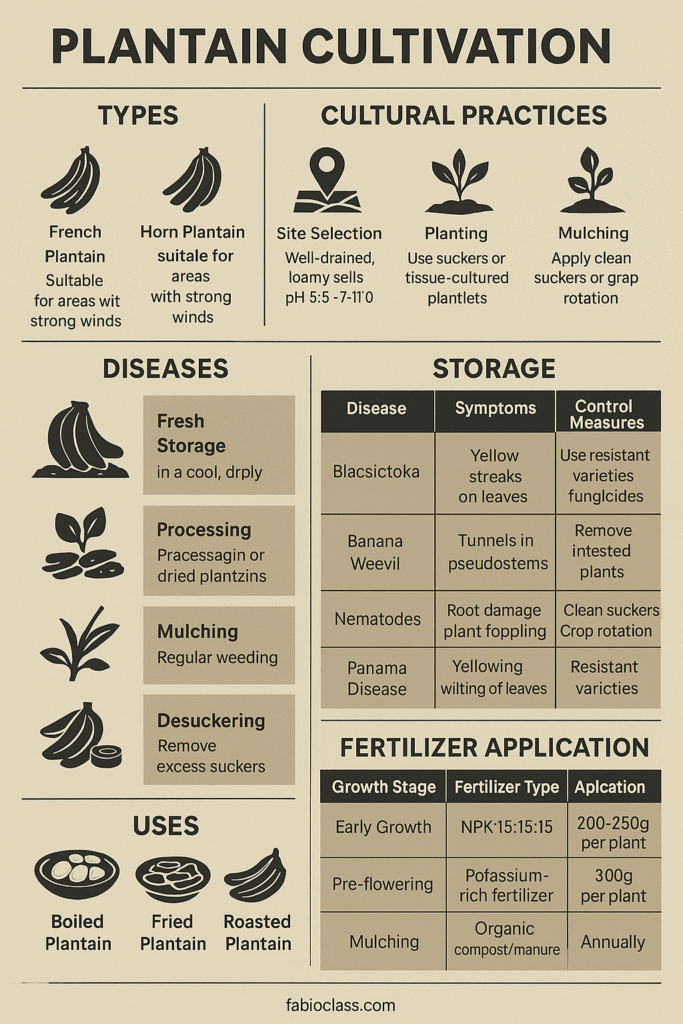
Plantain Farming Infographic
A summarized infographic on plantain cultivation is available for easy reference.
(Insert infographic image here once designed and uploaded)
Conclusion
Plantain farming offers great potential for food security and income generation. By following good cultural practices, managing pests and diseases, applying fertilizers correctly, and using proper storage methods, farmers can significantly increase their yield and profits.
plantain cultivation and cultural practices.
plantain botanically known as Musa Sp is a type of crop grown using plantain suckers. plantain cultivation can well be practised in areas of high rainfall.
in some countries, plantain or bananas are cultivated for export in order to earn foreign exchange. this major food crop serves as a staple food source in most African states or nations.
the cultivation of plantain strives very well in the rainforest belt. banana and plantain are biennial crops.
cultural practices in the cultivation of plantain and banana
plantain farming include improved varieties of planting materials called suckers; soil fertility; planting spacing know-how; manure application, and most importantly,
water application are some of the key points one has to learn about planting plantain
land preparation in the cultivation of plantain and banana
Land Preparation: Clearing of the land to plant plantain is followed by stumping and making of ridges or heaps.
Many farmers might have tried and failed in plantain farming, but with the necessary requirements in place, the plantain cultivation business (check out types business you can do here) can prove to be very lucrative and easy to start up. It is equally done in an integrated system.
LIVER FLUKE
162. ECTO PARASITES
163. TICK
check out these recent posts
Originally posted 2025-07-04 17:09:10.