
Sustainable Livestock Farming Practices for Modern Agriculture
Introduction: As the demand for animal products continues to grow, there is increasing pressure on farmers to produce more while minimizing the environmental and ethical impacts of livestock farming. This has given rise to the concept of sustainable livestock farming practices. These practices aim to improve animal welfare, reduce greenhouse gas emissions, and ensure long-term productivity. In this blog post, we will explore key techniques, benefits, and challenges involved in sustainable animal agriculture.
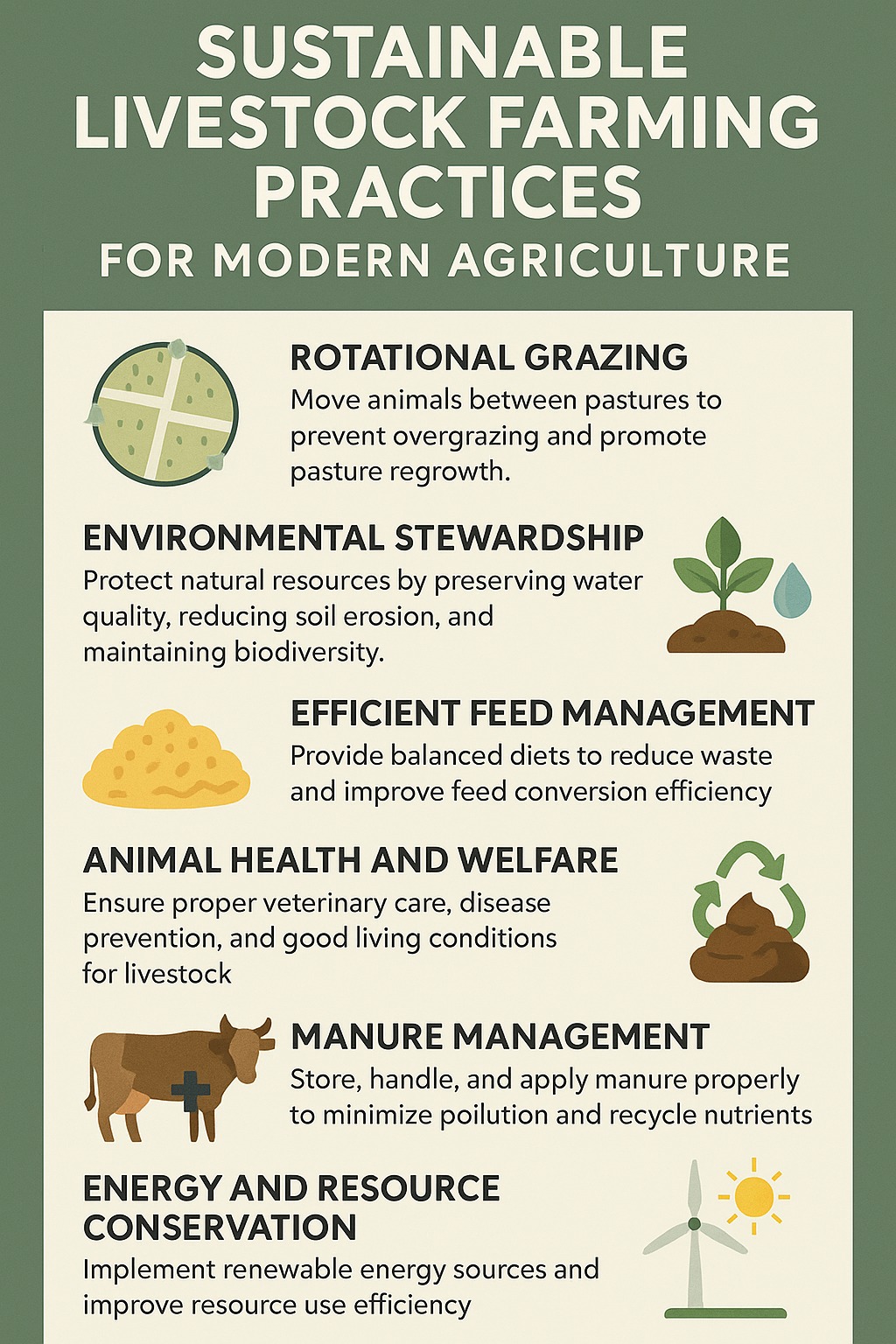
Keywords: sustainable livestock farming, animal agriculture, eco-friendly livestock practices, sustainable farming techniques
What is Sustainable Livestock Farming?
Sustainable livestock farming refers to the responsible management of animals in a way that balances productivity with environmental stewardship, animal welfare, and economic viability. It integrates traditional knowledge and modern innovations to promote efficient and ethical production systems.
Key Practices in Sustainable Livestock Farming
- Rotational Grazing:
- Moving animals between pastures to allow for regrowth and reduce overgrazing.
- Promotes healthy soil and plant life.
- Integrated Crop-Livestock Systems:
- Combining livestock and crop production to recycle nutrients and reduce waste.
- Enhances farm productivity and biodiversity.
- Manure Management:
- Collecting and composting animal waste to use as organic fertilizer.
- Reduces pollution and greenhouse gas emissions.
- Water Conservation Measures:
- Installing efficient watering systems and protecting water sources from contamination.
- Animal Welfare Standards:
- Providing adequate space, proper nutrition, and veterinary care.
- Ensures humane treatment and reduces stress in animals.
- Use of Native Breeds:
- Breeds adapted to local environments are more resilient and require fewer inputs.
- Silvopasture Systems:
- Integrating trees and shrubs into pastureland for shade, biodiversity, and carbon capture.
Benefits of Sustainable Livestock Farming
- Environmental Protection:
- Reduces land degradation, greenhouse gases, and water pollution. here’s my post on land degradation and effect
- Animal Health and Welfare:
- Healthier animals lead to better productivity and product quality.
- Improved Soil Fertility:
- Manure adds nutrients to the soil, improving crop yields.
- Economic Resilience:
- Lower dependence on synthetic inputs reduces costs over time.
- Climate Change Mitigation:
- Adoption of eco-friendly practices contributes to global climate goals.
Challenges in Implementing Sustainable Practices
- High initial costs of infrastructure and training.
- Limited access to technology and veterinary services in rural areas.
- Resistance to change from traditional methods.
- Lack of supportive government policies in some regions.
Future Outlook
The future of livestock farming lies in embracing sustainability. Governments, NGOs, and private sector players are investing in research and incentives to promote sustainable animal agriculture. With the growing awareness among consumers and farmers alike, sustainable livestock practices are set to become the norm rather than the exception.
Conclusion
Adopting sustainable livestock farming practices is no longer optional—it is essential for ensuring food security, protecting the environment, and improving the quality of life for both animals and farmers. With the right support and knowledge, farmers can transition to systems that benefit their livelihoods and the planet.
Explore more on smart farming and sustainable agriculture at fabioclass.com.
Originally posted 2025-07-12 13:07:19.