
Understanding Nitrogen and Its Role in Plant Life
Nitrogen is one of the most essential elements for life on Earth. It plays a critical role in the growth and development of living organisms, especially plants. This blog post explores the nitrogen cycle, its components, composition, importance, nitrogen fixation, and how nitrogen affects plant life.
What Is Nitrogen?
Nitrogen is a colorless, odorless, and tasteless gas that makes up about 78% of Earth’s atmosphere by volume. Chemically, nitrogen is represented by the symbol N and is a diatomic molecule (N₂) in its natural gaseous state. While it’s abundant in the air, most organisms, including plants, cannot use atmospheric nitrogen directly
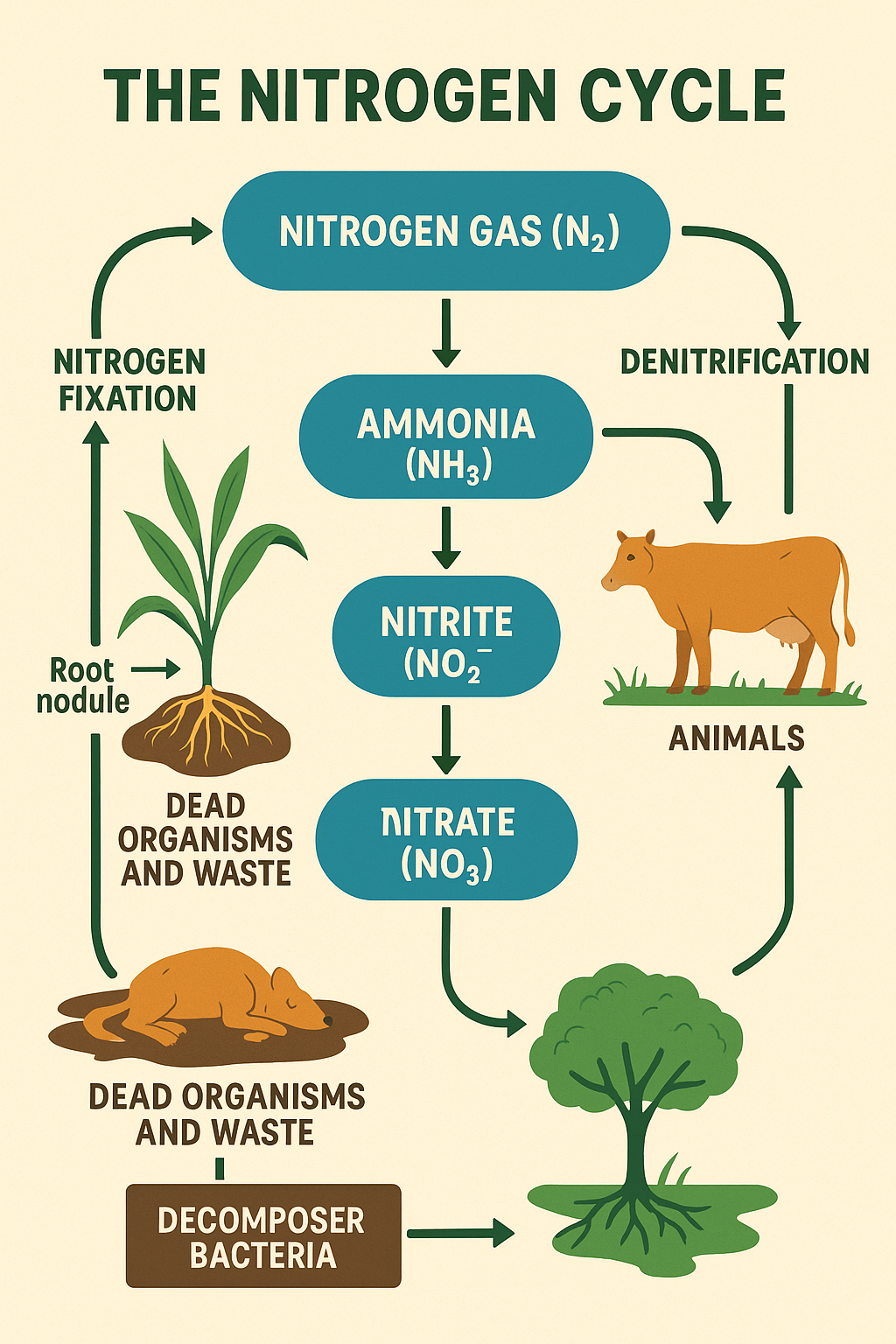
Composition and Forms of Nitrogen
Nitrogen exists in several forms in nature, each playing a unique role in biological and ecological systems. The most common nitrogen compounds include:
N₂ (Nitrogen gas) – atmospheric nitrogen
NH₃ (Ammonia)
NO₃⁻ (Nitrate)
NO₂⁻ (Nitrite)
NH₄⁺ (Ammonium)
Nitric oxide (NO) and Nitrous oxide (N₂O) – trace gases involved in atmospheric reactions
These forms make up various components of the nitrogen cycle.
Components of the Nitrogen Cycle
The nitrogen cycle is a biogeochemical cycle that describes the transformation and movement of nitrogen through different ecosystems. Its major components include:
- Nitrogen Fixation
- Nitrification
- Assimilation
- Ammonification
- Denitrification
Let’s break each down.
- Nitrogen Fixation
Nitrogen fixation is the conversion of atmospheric nitrogen (N₂) into ammonia (NH₃) or related compounds that plants can absorb. This process can be:
Biological: Carried out by nitrogen-fixing bacteria like Rhizobium (found in legume root nodules) and Azotobacter (free-living).
Atmospheric: Through lightning, which breaks N₂ molecules allowing them to combine with oxygen to form nitrates.
Industrial: Via the Haber-Bosch process for producing fertilizers.
- Nitrification
Nitrification involves the conversion of ammonia into nitrites (NO₂⁻) and then into nitrates (NO₃⁻) by nitrifying bacteria like Nitrosomonas and Nitrobacter. Nitrates are the most usable form of nitrogen for plants.
- Assimilation
During assimilation, plants absorb nitrates and ammonium from the soil through their roots. They use these compounds to build proteins, enzymes, and DNA—essential molecules for life.
- Ammonification
Ammonification is the decomposition of organic matter by bacteria and fungi, which converts nitrogen in dead organisms and waste products back into ammonium (NH₄⁺).
- Denitrification
This step converts nitrates back into nitrogen gas (N₂) through the action of denitrifying bacteria such as Pseudomonas. It completes the nitrogen cycle by releasing nitrogen back into the atmosphere.
Importance of Nitrogen
Nitrogen is vital for all living things. Its significance includes:
Protein synthesis: Nitrogen is a core component of amino acids, which form proteins.
DNA and RNA: Nitrogenous bases are crucial for the structure of nucleic acids.
Chlorophyll production: Nitrogen is part of the chlorophyll molecule, which enables photosynthesis.
Enzyme function: Many enzymes require nitrogen to function properly.
Agricultural productivity: Nitrogen is a key nutrient in fertilizers used to boost crop yields.
How Does Nitrogen Affect Plant Life?
Nitrogen has a direct impact on plant growth and development:
- Promotes Leafy Growth
Nitrogen is essential for producing chlorophyll, which is needed for photosynthesis. It supports lush, green foliage and robust stem development.
- Enhances Root Development
While phosphorus primarily aids roots, balanced nitrogen levels support early root establishment, especially in young plants.
- Improves Yield and Quality
Adequate nitrogen contributes to better grain filling in cereals, fruit development, and higher protein content in crops like wheat and legumes.
- Deficiency Effects
Nitrogen deficiency leads to:
Stunted growth
Pale or yellow leaves (chlorosis)
Poor flowering and fruiting
Reduced crop yield
- Excess Nitrogen
Excessive nitrogen can be harmful:
Promotes excessive vegetative growth at the expense of fruits
Makes plants more prone to disease
Causes nitrate leaching, which contaminates groundwater
Nitrogen Fixing Plants
Certain plants improve soil fertility by fixing nitrogen naturally. These include:
Legumes: Beans, peas, lentils, soybeans, groundnuts
Cover crops: Alfalfa, clover
Tree species: Acacia, Sesbania
They are often used in crop rotation systems to enrich the soil with nitrogen organically.
Conclusion
Nitrogen plays a central role in plant nutrition and ecosystem sustainability. Understanding the nitrogen cycle and the processes of nitrogen fixation, nitrification, and assimilation is essential for managing soil fertility and improving crop production. For farmers, gardeners, and environmentalists, maintaining the right balance of nitrogen in the soil ensures healthy plant life and a more sustainable environment.
Keywords:
Originally posted 2025-07-23 12:20:56.