
Irrigation Systems and Water Conservation in Farming
Introduction
Water is a critical resource in agriculture, and efficient management of this resource is essential for ensuring sustainable farming practices. The use of modern irrigation systems plays a vital role in optimizing water usage and boosting crop productivity. In this blog post, we explore the different types of irrigation systems, the importance of water conservation in farming, and best practices for sustainable water use.
Keywords: irrigation systems, water conservation in farming, sustainable agriculture, efficient water use.
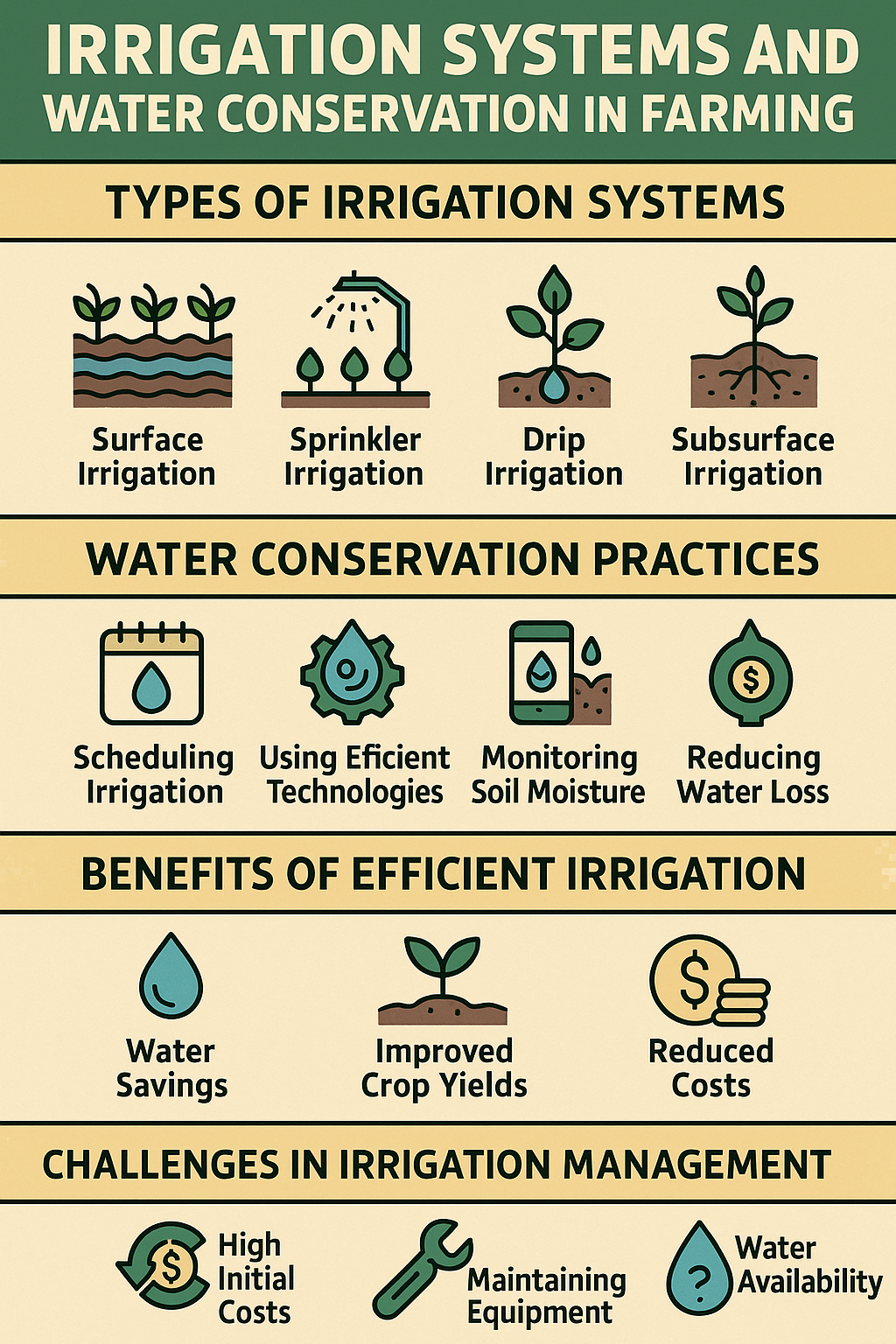
What is Irrigation in Agriculture?
Irrigation is the artificial application of water to soil or land to help grow agricultural crops. It is especially important in areas with irregular rainfall or arid conditions. By using proper irrigation systems, farmers can ensure that their crops receive the right amount of water at the right time.
Types of Irrigation Systems
- Surface Irrigation:
- Water flows over the soil by gravity.
- Common in rice and other grain farming.
- Drip Irrigation:
- Delivers water directly to plant roots through a network of pipes and emitters.
- Minimizes water loss and improves efficiency.
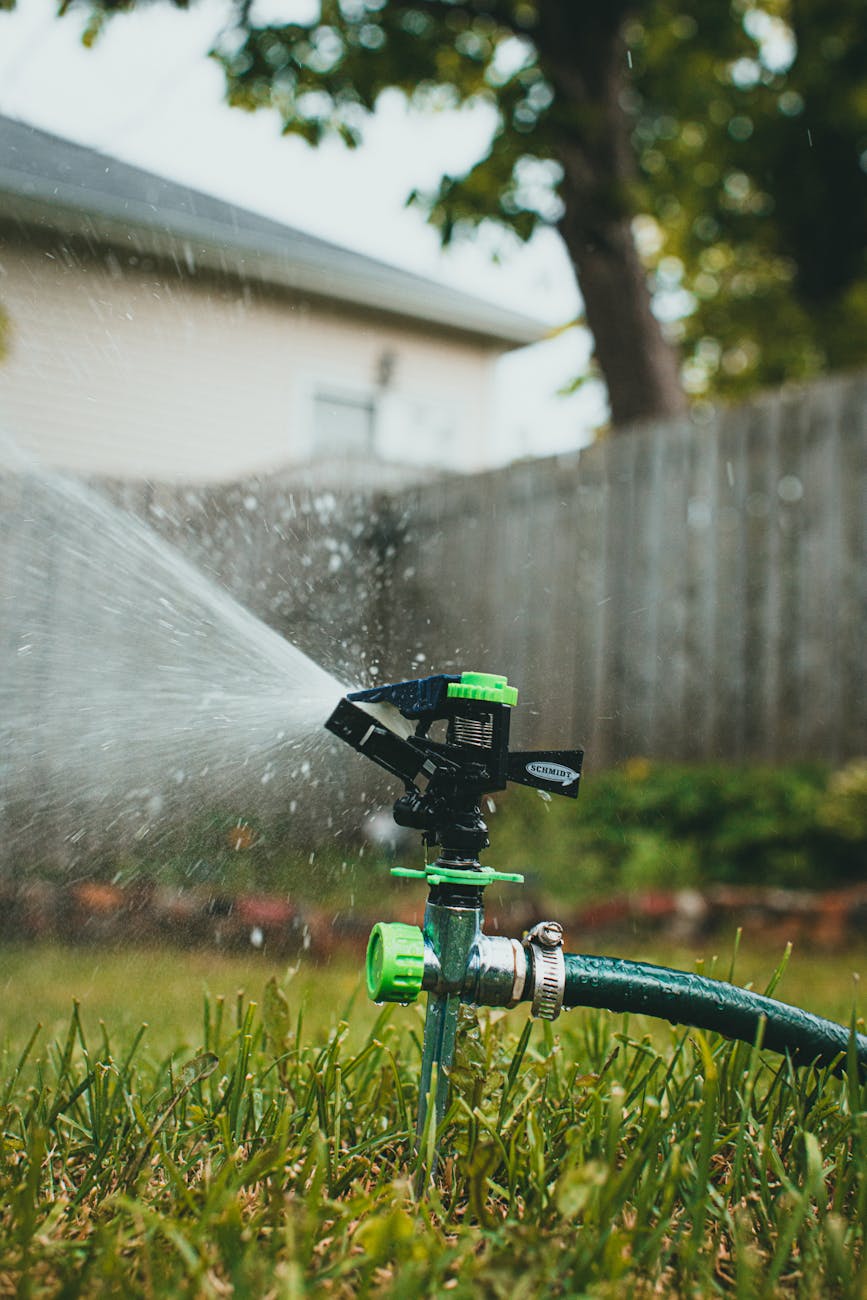
- Sprinkler Irrigation:
- Simulates rainfall by spraying water over crops using sprinklers.
- Suitable for various types of crops.
- Subsurface Irrigation:
- Water is applied below the soil surface through buried pipes.
- Reduces evaporation and water waste.
- Manual Irrigation:
- Involves hand-watering using buckets or watering cans.
- Common in small-scale and subsistence farming.
Importance of Water Conservation in Farming
- Environmental Protection:
- Reduces water pollution and preserves aquatic ecosystems.
- Cost Reduction:
- Efficient water use lowers operational costs for farmers.
- Increased Crop Yields:
- Consistent and adequate water supply promotes healthier plant growth.
- Adaptation to Climate Change:
- Helps farmers cope with droughts and erratic rainfall patterns.
- Preservation of Water Resources:
- Ensures water availability for future agricultural use.
Water Conservation Techniques in Agriculture
- Soil Moisture Monitoring:
- Use sensors to determine optimal watering times.
- Mulching:
- Applying organic matter on the soil surface to retain moisture.
- Rainwater Harvesting:
- Collecting and storing rainwater for irrigation use.
- Contour Farming and Terracing:
- Reduces water runoff and soil erosion.
- Use of Drought-Resistant Crops:
- Planting varieties that require less water.
- Scheduled Irrigation:
- Applying water during cooler parts of the day to reduce evaporation.
Challenges in Irrigation and Water Conservation
- High initial cost of advanced systems like drip and sprinkler.
- Limited technical knowledge in rural communities.
- Water scarcity in some regions.
- Maintenance issues with irrigation equipment.
Conclusion
Efficient irrigation systems and effective water conservation in farming are key components of modern agriculture. By adopting sustainable water management practices, farmers can improve crop yields, reduce environmental impact, and safeguard water resources for future generations.
For more insightful guides on agriculture and sustainability, visit fabioclass.com.
Originally posted 2025-07-10 11:49:38.