
Diabetes: Causes, Types, Symptoms,. Complications, and Management. Diabetes is one of the fastest-growing chronic diseases in the world today.
With millions of people living with the condition and millions more at risk, understanding diabetes is crucial for both prevention and proper management.
The disease occurs when the body either cannot produce enough insulin or cannot use the insulin effectively, leading to elevated blood sugar levels.
What is Diabetes?
Diabetes, also known as diabetes mellitus, is a chronic metabolic disorder that occurs when the body fails to regulate blood sugar effectively. Glucose, the body’s primary source of energy, comes from the food we eat. Insulin, a hormone made by the pancreas,
helps glucose move into cells to be used for energy. When insulin production or action is impaired, blood glucose levels rise, leading to hyperglycemia. Prolonged hyperglycemia damages blood vessels, nerves, and vital organs, making diabetes a serious health condition if not managed properly.
Frequently Asked Questions (FAQ)
Q1: Is diabetes a lifestyle disease?
Type 2 diabetes is often considered a lifestyle disease because unhealthy eating, lack of exercise, and obesity are major risk factors. Type 1 diabetes, however, is an autoimmune condition.
Q2: Can diabetes develop suddenly?
Yes, type 1 diabetes often develops suddenly, while type 2 diabetes develops gradually over time.
Q3: Is diabetes reversible?
Type 2 diabetes can sometimes be reversed or put into remission through weight loss, diet, and exercise, but type 1 diabetes cannot be reversed.
Q4: Do all overweight people get diabetes?
No, not all overweight people develop diabetes, but excess body fat increases the risk. Genetics and other factors also play a role.
Q5: Can you live a normal life with diabetes?
Yes, with proper management, diabetics can live long, healthy, and productive lives.
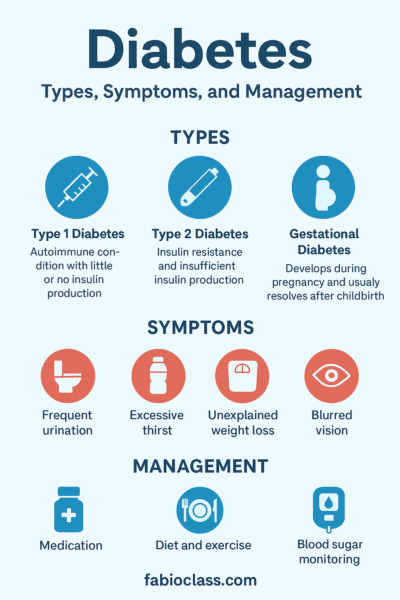
Types of Diabetes
Diabetes exists in different forms, each with unique causes, risk factors, and management methods.
1. Type 1 Diabetes
Type 1 diabetes is an autoimmune condition where the immune system mistakenly attacks the insulin-producing beta cells of the pancreas. This results in little or no insulin production. It is usually diagnosed in childhood or adolescence, though adults can develop it as well. People with type 1 diabetes rely on daily insulin injections or an insulin pump to survive.
2. Type 2 Diabetes
This is the most common type, accounting for over 90% of diabetes cases globally. It occurs when the body becomes resistant to insulin or when the pancreas cannot produce enough insulin to meet the body’s needs. Type 2 diabetes is strongly linked to obesity, poor diet, sedentary lifestyle, and genetics. It often develops slowly and may go unnoticed for years until complications arise.
3. Gestational Diabetes
Gestational diabetes occurs during pregnancy when hormonal changes interfere with insulin function. Although it usually disappears after delivery, it increases the risk of both the mother and child developing type 2 diabetes later in life. Proper medical supervision during pregnancy is crucial to prevent complications.
4. Prediabetes
Prediabetes is a warning stage where blood sugar levels are higher than normal but not high enough to be classified as diabetes. Lifestyle changes at this stage can reverse the condition and prevent type 2 diabetes from developing.
Global Impact of Diabetes
Diabetes is a major public health issue worldwide:
According to the World Health Organization (WHO), over 530 million people currently live with diabetes.
Low- and middle-income countries face the highest growth in diabetes cases due to urbanization, diet changes, and reduced physical activity.
The economic burden of diabetes includes healthcare costs, lost productivity, and reduced quality of life.
Causes and Risk Factors of Diabetes
Diabetes does not have a single cause. Instead, it results from a combination of genetic, lifestyle, and environmental factors.
Family history of diabetes
Obesity and excess abdominal fat
Poor diet (high in processed foods and sugar)
Sedentary lifestyle
Age (risk increases after 40)
Hypertension and high cholesterol
Hormonal changes (in pregnancy or other conditions)
Stress and poor sleep patterns
Pathophysiology of Diabetes
In healthy individuals, insulin binds to receptors on cell surfaces, allowing glucose to enter and provide energy. In diabetes:
Type 1 diabetes: The pancreas produces little or no insulin.
Type 2 diabetes: Cells become resistant to insulin’s action, forcing the pancreas to produce more insulin. Over time, insulin production declines.
Gestational diabetes: Pregnancy hormones block the effect of insulin, causing elevated glucose levels.
Symptoms of Diabetes
Diabetes can present with a variety of symptoms, including:
Frequent urination
Excessive thirst and hunger
Sudden weight loss
Fatigue and irritability
Slow healing wounds
Frequent infections
Blurred vision
Tingling sensations in hands and feet
Diagnosis of Diabetes
Doctors diagnose diabetes using blood tests:
Fasting Blood Sugar Test: Measures glucose after fasting for 8 hours.
Oral Glucose Tolerance Test (OGTT): Measures glucose after drinking a glucose solution.
Hemoglobin A1C Test: Shows average glucose levels over 2–3 months.
Random Blood Sugar Test: Can indicate diabetes if levels are very high.
Complications of Diabetes
If uncontrolled, diabetes can damage almost every part of the body:
Cardiovascular diseases (heart attack, stroke)
Kidney damage (nephropathy)
Nerve damage (neuropathy)
Eye damage (retinopathy, blindness)
Foot problems leading to amputations
Hearing loss
Alzheimer’s disease risk increase
Poor wound healing and infections
Prevention of Diabetes
Although type 1 diabetes cannot be prevented, type 2 diabetes can often be delayed or avoided through lifestyle choices:
Maintain a healthy weight
Eat a balanced diet rich in fiber, vegetables, and lean proteins
Avoid processed and sugary foods
Exercise regularly (150 minutes per week minimum)
Quit smoking and reduce alcohol intake
Monitor blood sugar levels if at risk
Management of Diabetes
Diabetes management focuses on keeping blood sugar levels within target ranges:
Medications
- Insulin therapy for type 1 and advanced type 2 diabetes
- Oral medications like metformin, sulfonylureas, and DPP-4 inhibitors for type 2 diabetes
- New therapies such as GLP-1 receptor agonists Lifestyle Changes
- Following a diabetes-friendly meal plan
- Regular exercise to improve insulin sensitivity
- Stress management techniques such as yoga and meditation
- Regular sleep for hormonal balance Monitoring
- Self-monitoring blood sugar using glucometers
- Regular A1C tests
- Keeping track of blood pressure and cholesterol Diet and Nutrition for DiabeticsA healthy diet plays a central role in diabetes management:
Focus on whole grains, vegetables, and legumes
Choose lean proteins such as fish, chicken, and beans
Limit sugary snacks, white bread, and fried foods
Use healthy fats like olive oil and avocado
Practice portion control
Prefer low glycemic index (GI) foods
Myths and Facts About Diabetes
Myth: Eating too much sugar directly causes diabetes.
Fact: Diet is a risk factor, but genetics and lifestyle also play a major role.
Myth: Only overweight people get diabetes.
Fact: Thin individuals can develop diabetes due to genetics and other factors.
Myth: People with diabetes cannot eat fruits.
Fact: Diabetics can eat fruits in moderation, focusing on low-GI options.
Myth: Diabetes always leads to complications.
Fact: With proper care, many diabetics live healthy, complication-free lives.
Frequently Asked Questions (FAQ)
Q6: Can diabetes cause infertility?
Yes, poorly controlled diabetes can affect fertility in both men and women.
Q7: Can stress trigger diabetes?
Chronic stress can raise blood sugar and increase the risk of type 2 diabetes.
Q8: What is the difference between type 1 and type 2 diabetes?
Type 1 is autoimmune with no insulin production, while type 2 involves insulin resistance.
Q9: Can traditional medicine cure diabetes?
Some herbal remedies may help lower blood sugar, but they should never replace prescribed medical treatment.
Q10: How often should diabetics visit their doctor?
Most diabetics should see their doctor every 3–6 months, or more often if complications arise.
Summary
Diabetes is a global health concern that requires proper understanding, awareness, and management. It affects millions of people and, if left untreated, can lead to severe complications. However, with lifestyle changes, medication, and regular monitoring, people with diabetes can live long and fulfilling lives. Education, prevention, and early detection remain the most effective tools in the fight against diabetes.
Originally posted 2025-08-27 19:48:19.