
The Advantages and Cost Effects of Farm Mechanization
Farm mechanization refers to the use of machinery and modern tools to carry out agricultural operations, from land preparation to harvesting and post-harvest handling. Over the years, mechanization has revolutionized agriculture across the globe, bringing about increased productivity, labor efficiency, and overall transformation in food systems. Below is a detailed look at the key advantages of farm mechanization along with its cost implications.
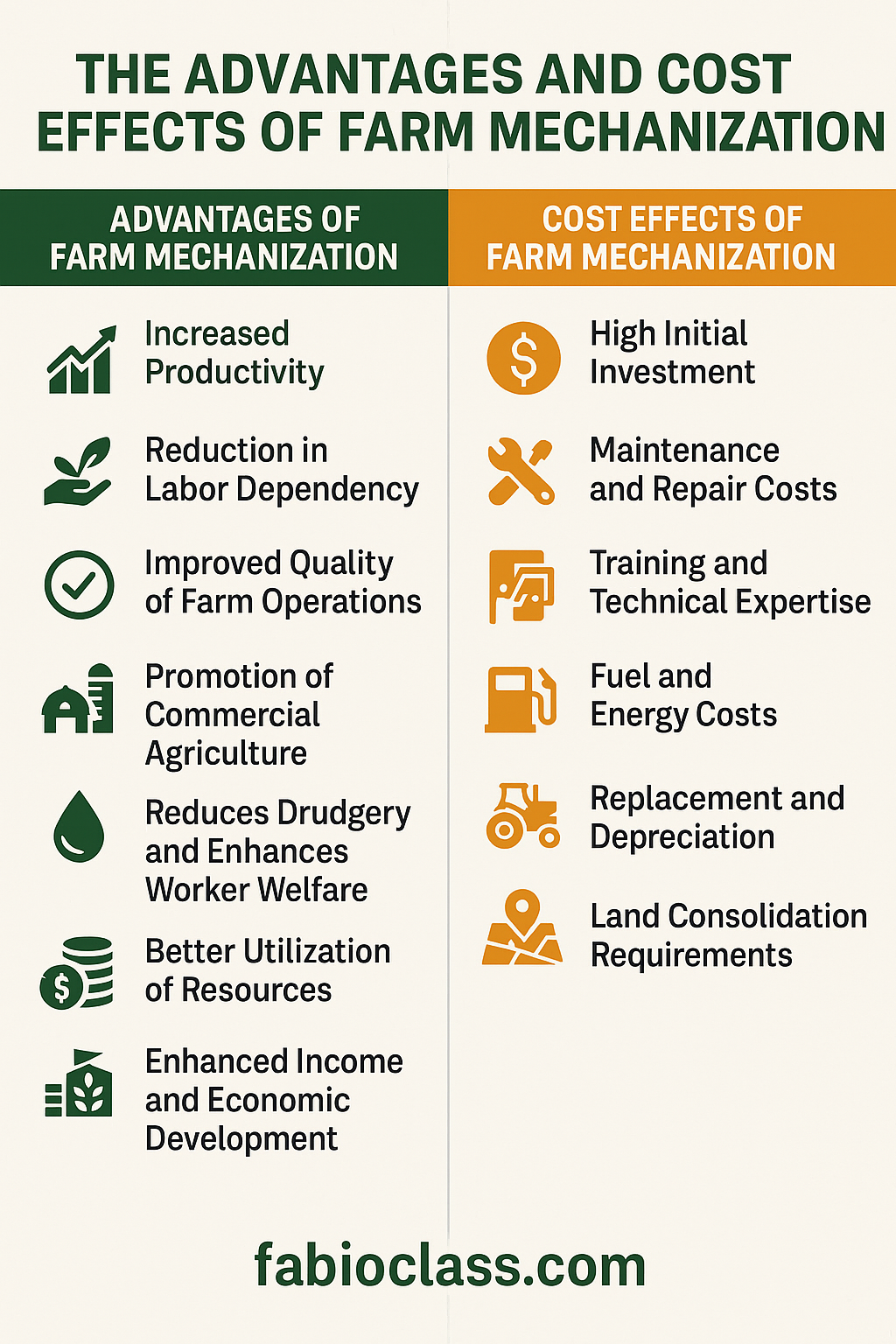
Advantages of Farm Mechanization
- Increased Productivity
One of the most significant benefits of mechanization is the marked increase in productivity. Tractors, harvesters, planters, and irrigation systems work much faster and more efficiently than manual labor. A mechanized farm can cover more hectares in less time, ensuring timely planting and harvesting which leads to higher crop yields.
- Reduction in Labor Dependency
Mechanization reduces the overreliance on human labor. This is especially important in regions where there is a shortage of farm workers due to urban migration or demographic changes. Fewer workers are required to manage larger areas of land, making it ideal for commercial-scale agriculture.
- Improved Quality of Farm Operations
Mechanized tools ensure precision in various agricultural tasks such as seed spacing, fertilizer application, and irrigation. This improves the uniformity and quality of the output, leading to better crop stands and reduced losses.
- Timeliness of Agricultural Activities
Using machines allows for timely execution of farming operations. Delays in planting, fertilizing, or harvesting—common in manual systems—can lead to crop failure or losses. Mechanization ensures that critical tasks are carried out at the most appropriate times.
- Promotion of Commercial Agriculture
Mechanization supports large-scale farming by reducing the time and effort needed to manage vast plots of land. It makes commercial farming more viable, especially in areas transitioning from subsistence to market-oriented agriculture.
- Reduces Drudgery and Enhances Worker Welfare
Manual farming is physically demanding and often leads to fatigue and health issues. Mechanization reduces this drudgery, improves working conditions, and attracts more youth into agriculture due to its appeal as a modern profession.
- Better Utilization of Resources
Modern equipment allows for the efficient use of inputs such as seeds, water, and fertilizers. For example, precision planters reduce seed wastage, and drip irrigation conserves water—both of which lower production costs and environmental impact.
- Enhanced Income and Economic Development
By boosting productivity and enabling larger harvests, mechanization increases farmers’ income. It also stimulates the rural economy by creating jobs in machinery maintenance, sales, and manufacturing sectors.
Cost Effects of Farm Mechanization
While farm mechanization offers numerous advantages, it comes with associated costs that must be considered, especially by smallholder farmers and those in developing regions.
- High Initial Investment
Purchasing tractors, harvesters, and other mechanized tools requires a significant upfront capital outlay. Many small-scale farmers may find these costs prohibitive without access to subsidies, credit facilities, or cooperative ownership models.
- Maintenance and Repair Costs
Farm machinery must be regularly maintained and repaired to remain effective. This includes servicing engines, replacing worn parts, and using high-quality fuel and lubricants—all of which contribute to operating expenses.
- Training and Technical Expertise
Operators need proper training to handle machinery efficiently and safely. Training programs and extension services are necessary to avoid misuse and reduce the risk of damage or accidents, adding to the total cost of adoption.
- Fuel and Energy Costs
Mechanized equipment often depends on diesel, petrol, or electricity. The fluctuation in fuel prices directly affects the cost-efficiency of mechanized farming operations, especially during peak seasons.
- Replacement and Depreciation
Over time, machines wear out and need to be replaced. Depreciation reduces their value, and farmers must plan for long-term replacements, which adds to the economic burden of owning such assets.
- Land Consolidation Requirements
Most machines are best suited for large, contiguous land parcels. Small and fragmented farms may need to consolidate land or collaborate with others to make mechanization cost-effective, which can be socially or politically challenging.
summary
Farm mechanization brings transformative benefits to agriculture by improving efficiency, reducing labor needs, and increasing production. However, the costs of acquiring, maintaining, and operating machinery remain significant barriers—especially for small-scale farmers.
To maximize the advantages while minimizing cost-related drawbacks, farmers can explore cooperative ownership, government subsidy programs, and lease options. Additionally, continuous training and development of local service providers can help rural communities adopt mechanization sustainably and profitably.
(f) Machinery requires large capital investment. Only farmers that have enough money will be able to acquire machines. (g) The use of machines in farming requires an adequate and continuous supply of energy from fuel and electricity which is a big disadvantage of farm mechanization. Problems will arise if the supply is not enough, or is lacking
Here are 10 FAQs on farm mechanization:
1. Q: What is farm mechanization?
A: Farm mechanization refers to the use of machinery and technology to improve the efficiency and productivity of farming operations.
2. Q: What are the benefits of farm mechanization?
A: Farm mechanization can increase productivity, reduce labor costs, improve crop quality, and enhance farmer safety.
3. Q: What types of machinery are used in farm mechanization?
A: Examples of machinery used in farm mechanization include tractors, plows, planters, harvesters, and irrigation systems.
4. Q: How does farm mechanization impact labor?
A: Farm mechanization can reduce the need for manual labor, but it can also create new job opportunities in areas such as machinery maintenance and operation.
5. Q: What are the challenges of adopting farm mechanization?
A: Challenges of adopting farm mechanization include high upfront costs, maintenance and repair requirements, and the need for specialized training.
6. Q: How can farm mechanization improve crop yields?
A: Farm mechanization can improve crop yields by enabling more efficient planting, irrigation, and harvesting, as well as reducing crop damage and losses.
7. Q: What role does technology play in farm mechanization?
A: Technology, such as precision agriculture and automation, can enhance the efficiency and effectiveness of farm mechanization.
8. Q: Can farm mechanization help reduce post-harvest losses?
A: Yes, farm mechanization can help reduce post-harvest losses by enabling more efficient and gentle handling of crops.
9. Q: How can small-scale farmers benefit from farm mechanization?
A: Small-scale farmers can benefit from farm mechanization by accessing affordable machinery and equipment, improving productivity, and increasing income.
10. Q: What is the future of farm mechanization?
A: The future of farm mechanization is likely to involve increased use of automation, robotics, and artificial intelligence to further improve efficiency and productivity.
Originally posted 2025-08-08 08:15:00.