
Biodiversity: Meaning, Types, Importance, Threats, and Conservation
Biodiversity is the variety of life on Earth, including plants, animals, microorganisms, and ecosystems. Learn about the meaning, types, importance, threats, and conservation of biodiversity in this comprehensive guide.
Introduction to Biodiversity
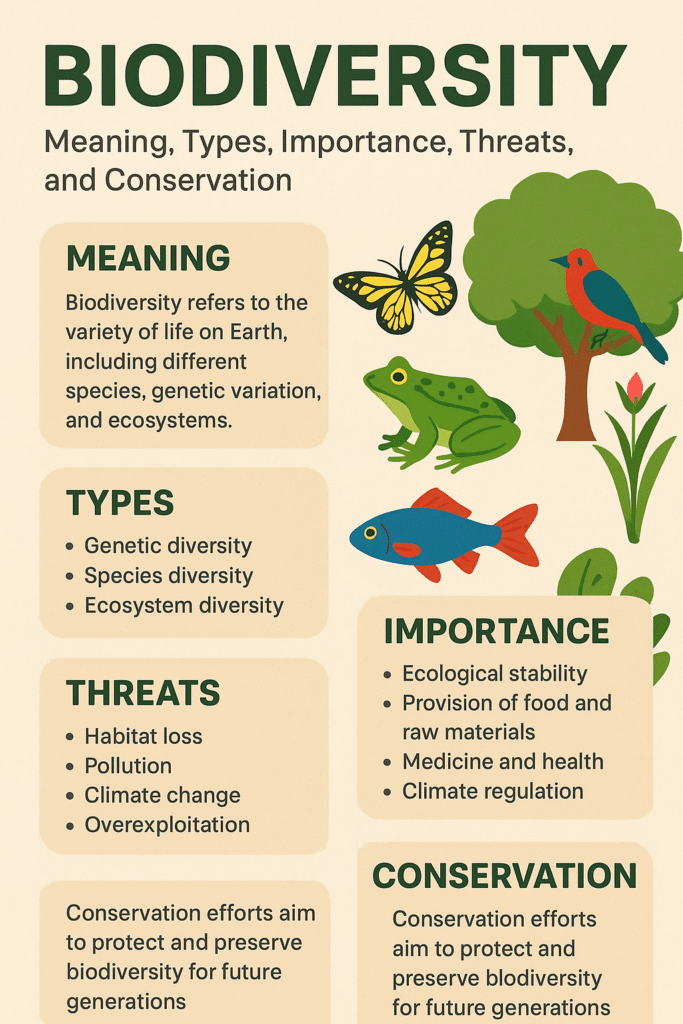
Biodiversity, short for “biological diversity,” refers to the variety of living organisms on Earth. It encompasses every form of life, from the smallest bacteria to the largest mammals, along with the ecosystems they form and the genetic differences within them. Biodiversity is not simply the number of species; it includes genetic variation, ecosystem diversity, and the complex interactions between organisms and their environments.
The United Nations Convention on Biological Diversity (1992) highlighted biodiversity as a cornerstone of sustainable development. Today, scientists and policymakers recognize that conserving biodiversity is critical for maintaining ecological balance and human survival.
Meaning of Biodiversity
The term biodiversity was first popularized in the 1980s and has since become central to ecological studies. It refers to three main levels:
- Genetic diversity – the variation of genes within species.
- Species diversity – the variety of species in a given ecosystem or region.
- Ecosystem diversity – the range of ecosystems, habitats, and ecological processes.
Together, these levels form the natural systems that sustain life.
Types of Biodiversities
- Genetic Diversity
Genetic diversity refers to the differences in DNA among individuals within a species. It determines traits such as disease resistance, adaptability, and physical characteristics. For example, different varieties of rice or wheat have unique genetic codes that make them resilient to pests or drought.
- Species Diversity
Species diversity is the variety of species within an ecosystem. For instance, tropical rainforests and coral reefs are rich in species diversity, housing thousands of plants, animals, and microorganisms. Species diversity ensures stability and productivity in ecosystems.
- Ecosystem Diversity
Ecosystem diversity refers to the range of habitats and ecological processes. Examples include deserts, wetlands, grasslands, mountains, coral reefs, and freshwater lakes. Each ecosystem plays a role in regulating natural cycles and supporting life.
Importance of Biodiversity
- Ecological Stability
Biodiversity ensures the resilience of ecosystems. A diverse ecosystem can better withstand disturbances such as climate fluctuations, diseases, or human exploitation.
- Provision of Food and Raw Materials
Many of the world’s crops, livestock breeds, and fisheries depend on biodiversity. Diverse ecosystems provide timber, fuelwood, fibers, and other raw materials essential for human survival.
- Medicine and Health
Over 50% of modern medicines originate from plants, animals, or microorganisms. For example, penicillin comes from fungi, while quinine, used to treat malaria, is derived from plants.
- Climate Regulation
Forests, wetlands, and oceans act as carbon sinks, absorbing greenhouse gases and regulating the Earth’s climate. Biodiversity loss reduces the planet’s capacity to mitigate climate change.
- Soil Fertility and Agriculture
Microorganisms in soil recycle nutrients, making land fertile. Pollinators such as bees and butterflies enhance crop productivity. Without biodiversity, food systems would collapse.
- Cultural and Recreational Value
Biodiversity supports ecotourism, spiritual traditions, and cultural practices. Many communities consider forests, rivers, or certain species sacred.
Threats to Biodiversity
Despite its importance, biodiversity faces severe threats from human activities. The major threats include:
- Habitat Loss and Fragmentation
Deforestation, urbanization, and land conversion for agriculture destroy habitats, forcing species to migrate or die. The Amazon rainforest is one of the most affected regions.
- Pollution
Air, water, and soil pollution threaten ecosystems. Oil spills harm marine biodiversity, while pesticides kill pollinators and soil organisms.
- Climate Change
Global warming disrupts ecosystems by altering rainfall patterns, raising sea levels, and causing extreme weather. Coral bleaching is a direct result of rising ocean temperatures.
- Overexploitation of Resources
Overfishing, illegal wildlife trade, and unsustainable hunting reduce populations of species, pushing many toward extinction.
- Invasive Species
Non-native species often outcompete local species, disrupting ecosystems. For example, water hyacinth invades freshwater systems in Africa and Asia, blocking waterways and suffocating native aquatic life.
Biodiversity Hotspots
Biodiversity hotspots are areas rich in species but under significant threat. Some of the world’s hotspots include:
Amazon Rainforest (South America)
Congo Basin (Africa)
Indo-Burma Region (Asia)
Coral Triangle (Southeast Asia)
Madagascar and Indian Ocean Islands
These regions are home to unique species found nowhere else in the world.
Conservation of Biodiversity
- In-Situ Conservation
This involves protecting species in their natural habitats. Examples include:
National parks
Wildlife sanctuaries
Biosphere reserves
- Ex-Situ Conservation
This involves conserving species outside their natural habitats. Methods include:
Zoos and aquariums
Botanical gardens
Seed banks and gene banks
- Sustainable Practices
Adopting eco-friendly farming and fishing methods.
Reducing pollution and plastic use.
Supporting renewable energy sources.
- International Agreements
Global treaties like the Convention on Biological Diversity (CBD) and the Paris Agreement encourage nations to protect ecosystems and share genetic resources fairly.
- Community Participation
Local communities play a vital role in conservation through reforestation projects, wildlife protection, and sustainable resource use.
Future of Biodiversity
If current trends continue, scientists predict that one million species could face extinction in the coming decades. However, global awareness and conservation efforts provide hope. By balancing development with environmental protection, humanity can safeguard biodiversity for future generations.
Conclusion
Biodiversity is the foundation of life, supporting ecosystems, human survival, and economic growth. From genetic variation to ecosystem diversity, every level of biodiversity plays a role in maintaining ecological balance. Yet, biodiversity faces unprecedented threats from human activity and climate change.
Protecting biodiversity requires a collective effort involving governments, communities, scientists, and individuals. By conserving biodiversity, we ensure a sustainable and healthy planet for generations to come.
Frequently Asked Questions (FAQ) on Biodiversity
- What is biodiversity in simple terms?
Biodiversity means the variety of all living organisms on Earth. It includes animals, plants, fungi, and microorganisms, as well as the ecosystems where they live. Simply put, biodiversity is the “web of life” that keeps nature functioning.
- Why is biodiversity important?
Biodiversity is important because it provides essential services to humans and the planet. It supports food production, regulates climate, purifies water, maintains soil fertility, and supplies raw materials for medicine and industry. Without biodiversity, ecosystems would collapse, affecting human survival.
- What are the three main types of biodiversity?
The three main types of biodiversity are:
Genetic diversity – variations within a species, such as different breeds of dogs or varieties of rice.
Species diversity – the variety of species in a given area, such as forests, oceans, or deserts.
Ecosystem diversity – the variety of ecosystems, like rainforests, coral reefs, grasslands, and wetlands.
- What are examples of biodiversity?
Examples of biodiversity include:
The Amazon rainforest, which houses millions of plant and animal species.
Coral reefs, which support fish, crustaceans, and algae.
Agricultural biodiversity, such as different types of crops and livestock.
- How is biodiversity measured?
Scientists measure biodiversity by studying species richness (the number of species), species evenness (how evenly species are distributed), and genetic diversity. Tools like field surveys, satellite imaging, and DNA analysis help assess biodiversity levels.
- What are the major threats to biodiversity?
The main threats include:
Habitat destruction through deforestation and urbanization.
Pollution of air, water, and soil.
Climate change, which alters ecosystems and species distribution.
Overexploitation of species for food, medicine, or trade.
Invasive species, which outcompete native organisms.
- How does biodiversity affect humans?
Biodiversity directly impacts human life by ensuring food security, providing medicines, regulating air and water, and protecting against natural disasters. For example, mangroves reduce the impact of tsunamis, while bees and other pollinators increase crop yields.
- What is the role of biodiversity in agriculture?
Agricultural biodiversity ensures the availability of diverse crops and livestock breeds, which improves food security. Genetic diversity in crops makes them resistant to pests, diseases, and climate stress. For instance, having many rice varieties prevents widespread crop failure.
- What are some examples of biodiversity hotspots?
Biodiversity hotspots are regions rich in species but under threat from human activities. Examples include:
The Amazon rainforest in South America.
The Congo Basin in Africa.
The Himalayas in Asia.
The Coral Triangle in Southeast Asia.
- How does climate change affect biodiversity?
Climate change alters rainfall patterns, increases temperatures, and raises sea levels, forcing species to migrate or adapt. Many species face extinction because they cannot cope with rapid changes. Coral bleaching, caused by warmer seas, is one example of climate change damaging biodiversity.
- What is the difference between biodiversity and ecosystem?
Biodiversity refers to the variety of living organisms (genes, species, ecosystems).
Ecosystem refers to the interaction between living organisms and their physical environment (soil, water, air, climate).
Biodiversity makes ecosystems stronger and more resilient.
- How can biodiversity be conserved?
Biodiversity can be conserved through:
Establishing protected areas such as national parks and wildlife sanctuaries.
Sustainable farming, forestry, and fishing practices.
Reforestation and habitat restoration.
Reducing pollution and greenhouse gas emissions.
Enforcing laws against poaching and illegal wildlife trade.
- What is the Convention on Biological Diversity (CBD)?
The Convention on Biological Diversity is an international agreement adopted at the 1992 Rio Earth Summit. Its main goals are to conserve biodiversity, ensure sustainable use of natural resources, and guarantee fair sharing of genetic resources.
- How does biodiversity support the economy?
Biodiversity supports industries such as agriculture, fisheries, tourism, and medicine. Ecotourism, for example, generates income from natural habitats, while pharmaceutical companies rely on plant and animal compounds for new medicines.
- What can individuals do to protect biodiversity?
Everyone can play a role in protecting biodiversity by:
Planting trees and preserving local habitats.
Reducing waste and plastic use.
Supporting sustainable products and eco-friendly companies.
Participating in conservation programs.
Educating others about the value of biodiversity.
Originally posted 2025-08-19 19:58:00.