
Apoptosis: Definition, Pathways, Steps, Functions, and Importance of Programmed Cell Death
Apoptosis, also called programmed cell death, is a vital biological process that removes damaged or unwanted cells. Learn its definition, pathways, steps, functions, differences from necrosis, and role in health and disease.
Introduction: What is Apoptosis?
In biology, apoptosis means programmed cell death, where cells are removed in a controlled and beneficial way. Unlike necrosis (accidental cell death), apoptosis protects tissues, prevents cancer, and supports development.
Apoptosis is critical for embryonic growth, immune regulation, tissue renewal, and disease prevention, making it one of the most researched topics in cell biology and medicine.
Definition of Apoptosis
Apoptosis is the genetically programmed destruction of cells that occurs when they are no longer needed or become damaged.
Type of process: Controlled, physiological
Energy requirement: Requires ATP
Key outcome: No inflammation or tissue damage
Key Features of Apoptosis
Cells undergoing apoptosis display distinct biological changes:
Shrinkage of the cell
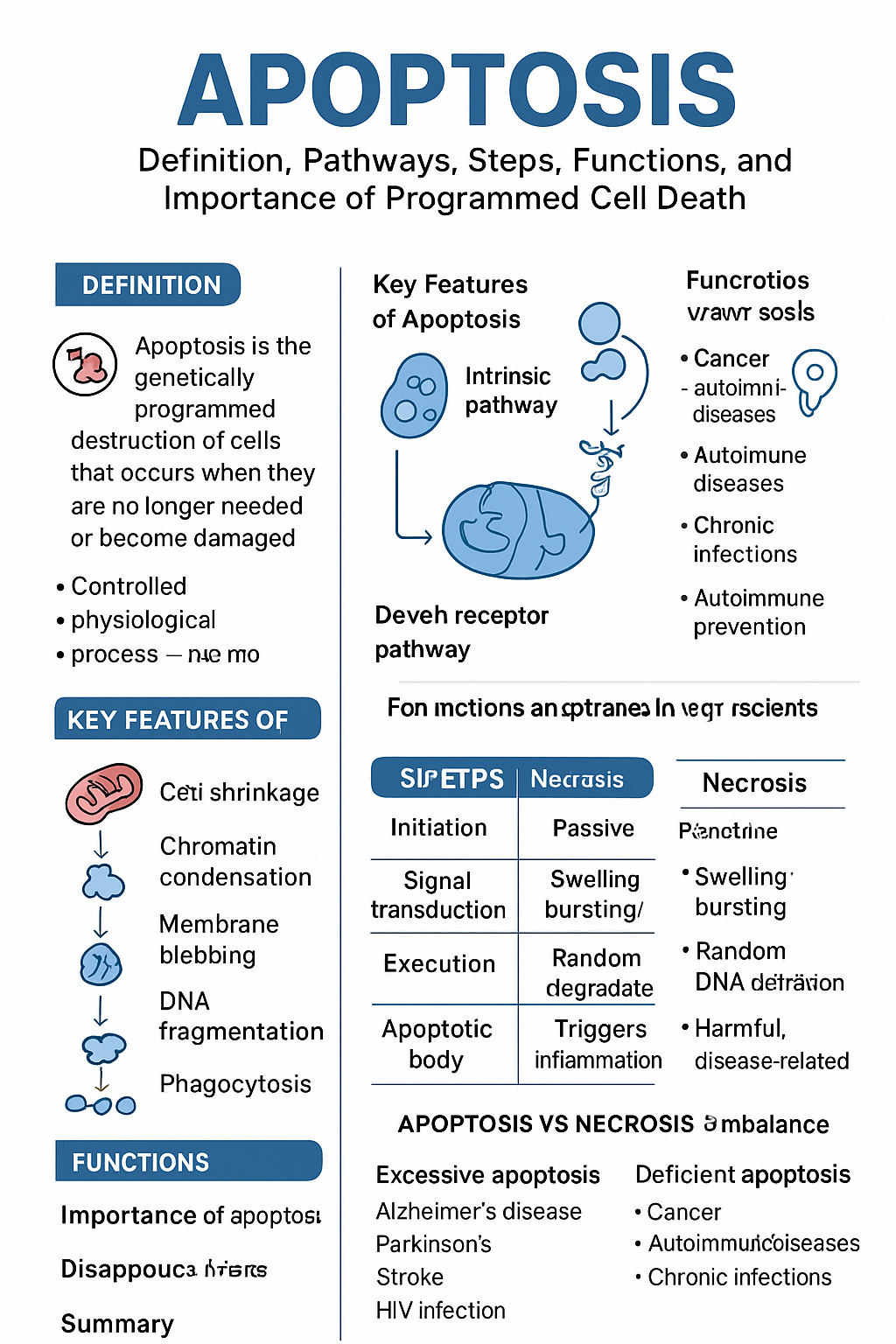
Chromatin condensation (DNA compacts at the nuclear edge)
Membrane blebbing (cell surface protrusions)
DNA fragmentation
Formation of apoptotic bodies
Phagocytosis by immune cells without inflammation
Pathways of Apoptosis
There are two primary apoptosis pathways:
- Intrinsic Pathway (Mitochondrial Pathway)
Activated by internal stress such as DNA damage, oxidative stress, or lack of nutrients.
Mitochondria release cytochrome c, which activates caspases.
Caspases break down cellular structures.
- Extrinsic Pathway (Death Receptor Pathway)
Initiated by external signals such as Fas ligand or tumor necrosis factor (TNF).
Death receptors on the cell membrane activate caspase enzymes.
Leads to controlled cell breakdown.
Both pathways converge into the execution phase, where caspases dismantle the cell.
Steps of Apoptosis
- Initiation – Triggered by intrinsic or extrinsic signals.
- Signal transduction – Activation of caspases.
- Execution – DNA, proteins, and organelles are broken down.
- Apoptotic body formation – Cell fragments safely packaged.
- Phagocytosis – Immune cells clear apoptotic bodies without inflammation.
Functions and Importance of Apoptosis
Apoptosis is vital for survival and healthy function. Its roles include:
Embryonic development – removes unnecessary cells, such as webbing in fingers.
Immune regulation – eliminates excess or damaged white blood cells.
Cancer prevention – removes abnormal or precancerous cells.
Cell renewal – ensures old cells are replaced in tissues like skin and intestines.
Defense against infection – kills virus-infected cells.
Prevention of autoimmunity – destroys self-reactive immune cells.
Apoptosis vs Necrosis
Feature Apoptosis (Programmed Cell Death) Necrosis (Accidental Cell Death)
Energy use Requires ATP (active process) No ATP required (passive)
Cell size Shrinks Swells and bursts
DNA changes Fragmented in a controlled way Random degradation
Inflammation None Triggers inflammation
Role Beneficial, protective Harmful, disease-related
Disorders Linked to Apoptosis Imbalance
Excessive apoptosis → Alzheimer’s, Parkinson’s, stroke, HIV infection.
Deficient apoptosis → Cancer, autoimmune diseases, chronic infections.
Applications of Apoptosis Research
Cancer therapy: Developing drugs that trigger apoptosis in tumors.
Neuroprotection: Preventing excess apoptosis in brain cells.
Immunology: Modulating apoptosis to manage autoimmune disorders.
Summary
Apoptosis, or programmed cell death, is a natural biological process that maintains tissue health, prevents diseases, and shapes normal development. Unlike necrosis, apoptosis is highly controlled, energy-dependent, and non-inflammatory. Its role in cancer prevention, immunity, and medicine makes it one of the most important subjects in biology and medical research.
Frequently Asked Questions (FAQs)
- What is apoptosis in biology?
- What is the main function of apoptosis?
- Which enzymes are involved in apoptosis?
- How is apoptosis different from necrosis?
- What are the two major pathways of apoptosis?
- What triggers apoptosis in a cell?
- Why is apoptosis important in development?
- Can apoptosis prevent cancer?
- What happens when apoptosis fails?
- Does apoptosis require energy?
- What role do mitochondria play in apoptosis?
- How does apoptosis regulate the immune system?
- Can excessive apoptosis cause disease?
- Is apoptosis reversible?
- How is apoptosis applied in medicine?
Originally posted 2025-08-19 19:12:33.