
The Importance of Livestock in Agriculture and Rural Development
Livestock plays a fundamental role in agriculture and rural development worldwide. From providing food and income to supporting farming activities and enhancing social status, the importance of livestock cannot be overstated. Whether in large commercial operations or smallholder farms, livestock contributes significantly to economies, nutrition, and sustainable agricultural systems.
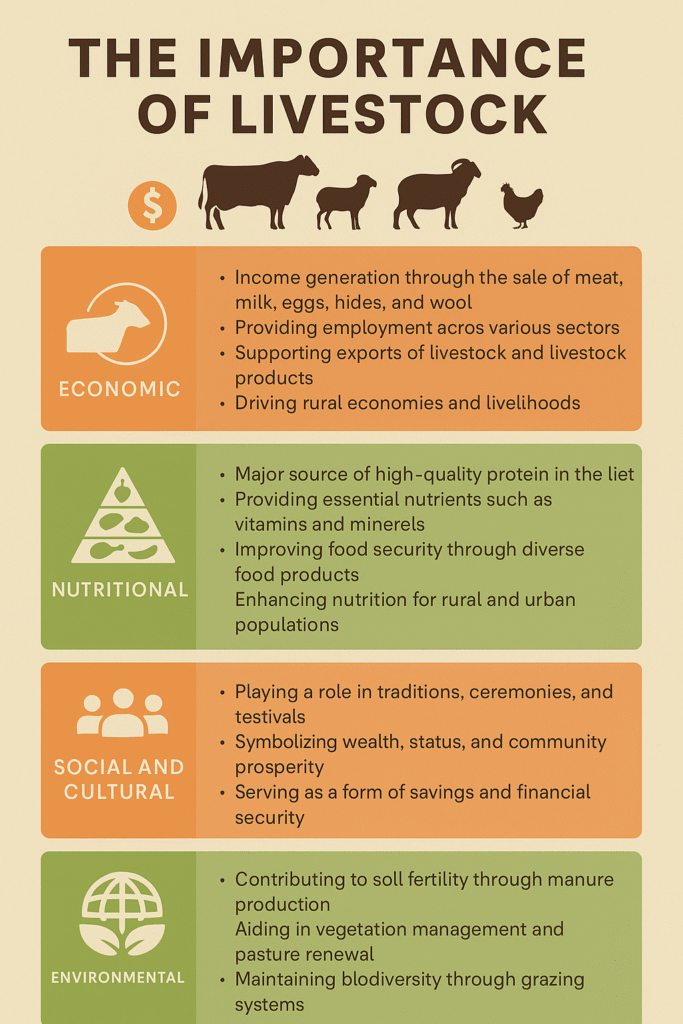
In this comprehensive post, we explore the multifaceted importance of livestock and how it shapes agricultural practices, food security, and rural livelihoods.
What is Livestock?
Livestock refers to domesticated animals raised in agricultural settings for various purposes. Common livestock species include:
Poultry
Horses and donkeys
These animals provide meat, milk, eggs, hides, wool, and draught power essential to both subsistence and commercial farming systems.
Economic Importance of Livestock
- Source of Income
One of the primary importance of livestock is income generation. Livestock farming enables farmers to earn revenue through the sale of animals, meat, milk, eggs, wool, and hides. In many developing countries, livestock sales are often the main source of household income.
- Employment Creation
Livestock farming creates direct and indirect employment. It provides jobs in animal husbandry, veterinary services, feed production, processing, transportation, and marketing of animal products. In rural areas, livestock farming supports millions of families.
- Export Revenue
In many countries, livestock and animal products contribute significantly to export earnings. Countries like New Zealand, Australia, Brazil, and Ethiopia export large quantities of meat, dairy, and hides, generating valuable foreign exchange.
Nutritional Importance of Livestock
- Food Supply
Livestock is a key source of high-quality food, supplying:
Meat (beef, goat, pork, poultry)
Milk and dairy products
Eggs
These products are rich in essential nutrients, including protein, iron, zinc, calcium, and vitamins, which are crucial for human health and development.
- Combating Malnutrition
Animal-sourced foods play a significant role in combating malnutrition, especially in children and vulnerable populations. Livestock-derived foods are often the only accessible source of protein and micronutrients in many developing regions.
Agricultural Importance of Livestock
- Draught Power
In traditional farming systems, livestock such as oxen, donkeys, and horses are used for ploughing fields, transporting goods, and powering mills. This reduces the need for expensive machinery.
- Manure Production
Livestock provides manure, which enriches the soil and enhances crop yields. Manure is essential for organic farming, as it improves soil fertility, structure, and microbial activity. This highlights another critical importance of livestock in maintaining soil health.
- Risk Mitigation
Livestock serves as a form of insurance for farmers. In times of crop failure, disease outbreaks, or economic hardship, animals can be sold to meet urgent financial needs.
Socio-Cultural Importance of Livestock
- Cultural Practices and Ceremonies
In many societies, livestock holds cultural and spiritual significance. Animals are often used in religious rituals, marriage ceremonies, festivals, and traditional celebrations.
- Social Status and Wealth
Owning livestock is a symbol of wealth and social standing in numerous rural communities. The size of a herd often reflects the economic position and prestige of a household.
- Women’s Empowerment
In various parts of the world, women are actively involved in livestock farming. Small livestock such as goats, sheep, and poultry offer women economic independence and a means to improve household nutrition.
Environmental Importance of Livestock
- Biodiversity and Ecosystem Management
Well-managed livestock systems contribute to maintaining grassland biodiversity and preventing bush encroachment. Grazing animals help recycle nutrients and sustain natural landscapes.
- Integrated Farming Systems
Livestock is central to integrated farming systems where crop and animal production complement each other. This reduces waste, enhances efficiency, and contributes to sustainability.
Challenges in the Livestock Sector
Despite the numerous benefits, the livestock sector faces significant challenges:
Animal diseases and lack of veterinary services
Climate change affecting pasture and water availability
Market access difficulties for small-scale farmers
Environmental concerns related to overgrazing and methane emissions
Future Prospects for Livestock
To maximize the importance of livestock in agriculture, there is a need for:
Investment in veterinary healthcare
Promotion of sustainable grazing practices
Access to markets and fair pricing for farmers
Research and development to improve productivity and animal welfare
Conclusion
The importance of livestock in agriculture and rural development spans economic, nutritional, agricultural, social, and environmental dimensions. Livestock not only provides food and income but also plays a key role in sustaining communities, preserving cultures, and supporting resilient agricultural systems.
With appropriate management, policy support, and innovation, livestock farming can continue to contribute to global food security, poverty reduction, and sustainable development.
For more in-depth agricultural content and sustainability guides, visit fabioclass.com
Originally posted 2025-07-06 18:26:01.