
BIOMAGNIFICATION: HOW TOXINS MOVE UP THE FOOD CHAIN
Introduction
Biomagnification is a process in which the concentration of toxic substances increases as they move up through the food chain. This environmental phenomenon poses serious threats to ecosystems and human health. From pesticides in crops to mercury in fish, biomagnification impacts the survival of species and the safety of our food.
Definition of Biomagnification
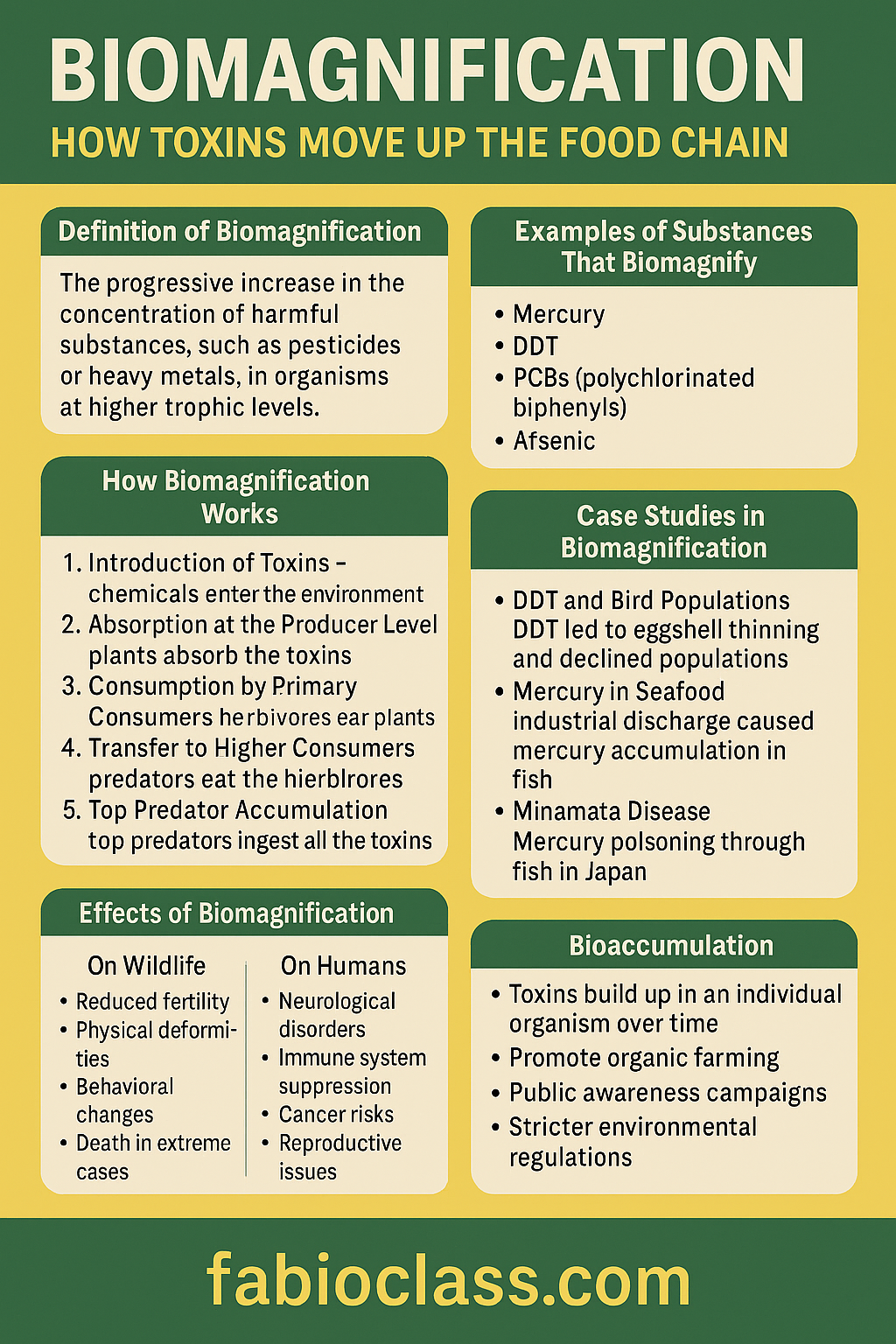
Biomagnification refers to the progressive increase in the concentration of harmful substances, such as pesticides, heavy metals, or industrial chemicals, in organisms at higher trophic levels. These toxins are often persistent, meaning they do not easily break down in the environment or inside living bodies.
How Biomagnification Works
- Introduction of Toxins – Chemicals enter the environment through industrial waste, pesticide application, or mining.
- Absorption at the Producer Level – Plants and algae absorb these toxins from soil or water.
- Consumption by Primary Consumers – Herbivores eat contaminated plants, introducing toxins into their bodies.
- Transfer to Higher Consumers – Predators eat herbivores, accumulating higher toxin concentrations.
- Top Predator Accumulation – Animals at the top of the food chain have the highest toxin levels.
Examples of Substances That Biomagnify
Mercury – accumulates in fish and seafood.
DDT (Dichlorodiphenyltrichloroethane) – a banned pesticide once common in agriculture.
PCBs (Polychlorinated biphenyls) – industrial chemicals used in electrical equipment.
Arsenic – enters water sources from mining and industrial waste.
Trophic Levels and Biomagnification
- Producers – plants, algae
- Primary Consumers – herbivorous fish, insects
- Secondary Consumers – carnivorous fish, birds
- Tertiary Consumers – large fish, predatory birds, humans
At each level, toxin concentration increases because the predators consume multiple contaminated prey.
Case Studies in Biomagnification
- DDT and Bird Populations
In the mid-20th century, widespread DDT use caused eggshell thinning in birds like eagles and ospreys, reducing reproduction rates. - Mercury in Seafood
Industrial pollution released mercury into rivers and oceans. Large fish like tuna and swordfish accumulate high mercury levels, posing health risks to humans. - Minamata Disease in Japan
In the 1950s, mercury pollution from a chemical plant led to severe neurological disease in communities consuming contaminated fish.
Effects of Biomagnification
On Wildlife
Reduced fertility
Physical deformities
Behavioral changes
Death in extreme cases
On Humans
Neurological disorders (from mercury)
Immune system suppression
Cancer risks
Reproductive issues
Difference Between Bioaccumulation and Biomagnification
Bioaccumulation: Toxins build up in a single organism over time.
Biomagnification: Toxins increase in concentration as they move up the food chain.
Prevention and Control of Biomagnification
Ban harmful pesticides like DDT.
Proper industrial waste disposal to prevent heavy metal contamination.
Promote organic farming to reduce chemical use.
Public awareness campaigns on safe seafood consumption.
Stricter environmental regulations for industries.
Importance of Addressing Biomagnification
Protects biodiversity and ecosystem health.
Safeguards human food safety.
Preserves endangered species.
Supports sustainable environmental practices.
Summary
Biomagnification is a hidden but powerful environmental threat. Understanding how toxins move through ecosystems is vital for protecting both wildlife and human health. Preventing it requires strict environmental regulations, sustainable practices, and public awareness.
10 FAQs About Biomagnification
What is the main cause of biomagnification?
The release of persistent pollutants like pesticides and heavy metals into the environment.
Is biomagnification harmful to humans?
Yes, it can cause neurological, reproductive, and immune system problems.
What is the difference between bioaccumulation and biomagnification?
Bioaccumulation occurs in one organism; biomagnification occurs across the food chain.
Can cooking remove toxins from food?
No, most persistent toxins cannot be destroyed by cooking.
Which animals are most affected?
Top predators like sharks, eagles, and humans.
Why are marine ecosystems vulnerable to biomagnification?
Because toxins easily dissolve in water and enter the aquatic food chain.
What is an example of a biomagnified toxin?
Mercury in tuna and swordfish.
How can biomagnification be reduced?
By reducing industrial pollution and avoiding harmful chemicals.
What role do humans play in biomagnification?
Human industrial activities are the main source of persistent pollutants.
Can biomagnification be completely stopped?
It can be significantly reduced, but complete elimination requires global cooperation.
Originally posted 2025-08-10 13:01:58.